

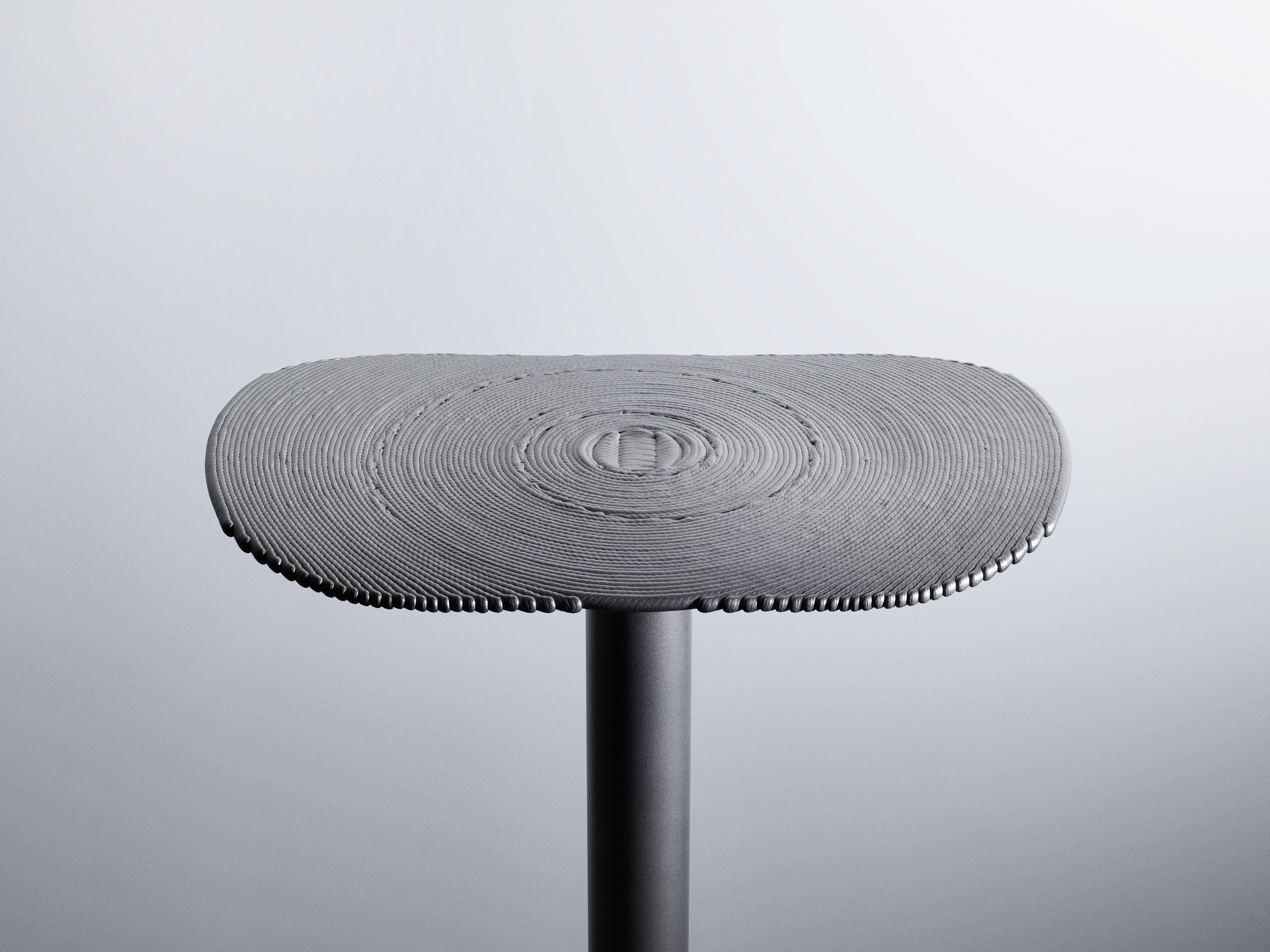
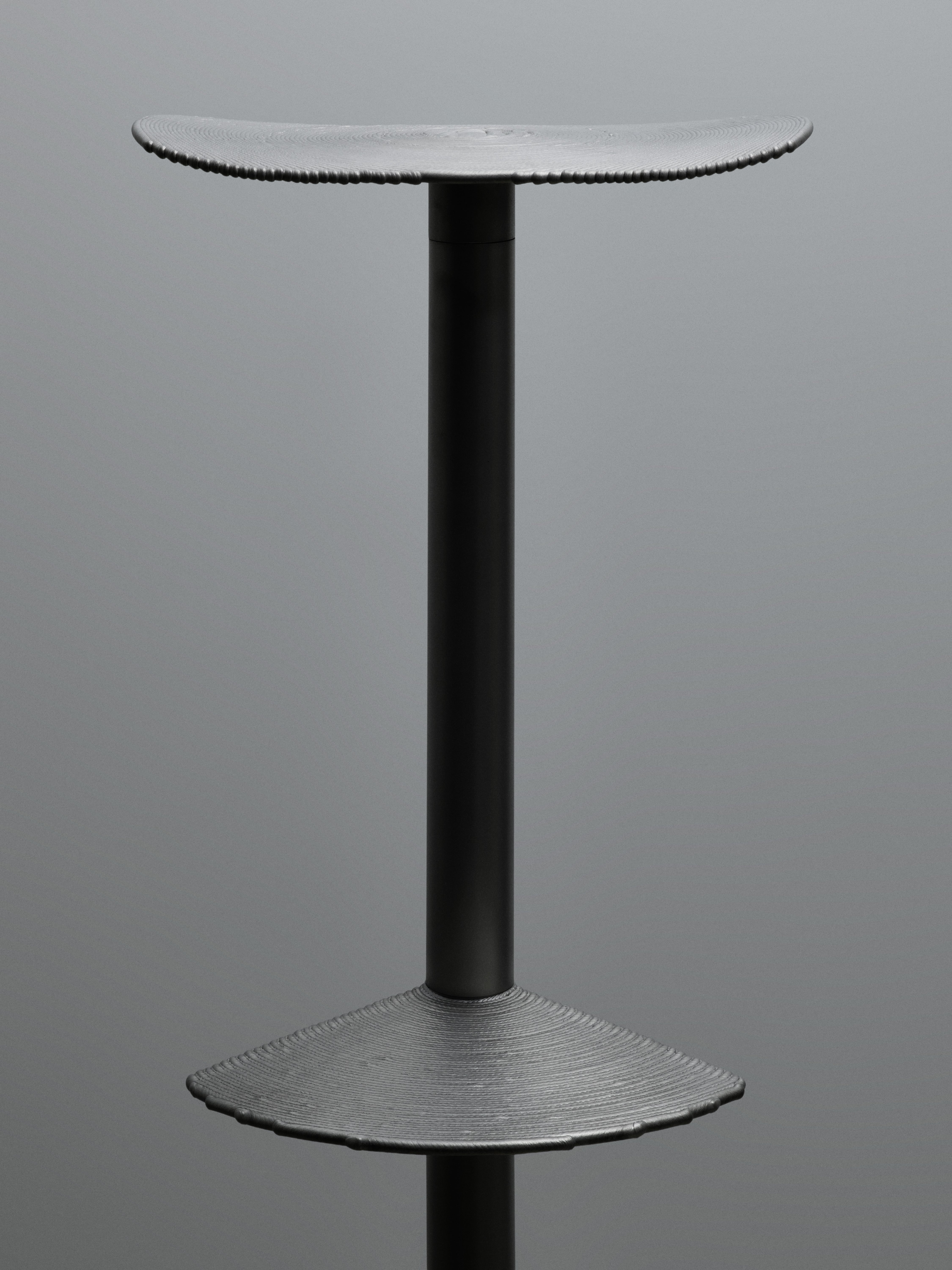
Conventional metal production makes variating geometries expensive and resource use intensive. We were interested in a process where form can change from piece to piece, without new tooling.
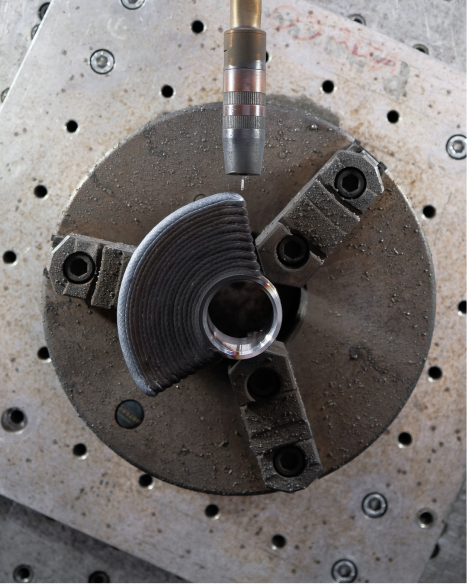
Metal parts are usually milled from a solid block or cast in a mould that only pays off at volume. The first route costs material, the second locks the form in place. Together with Gefertec, we explored Wire Arc Additive Manufacturing (WAAM), a hybrid process otherwise used for ship propellers, aircraft parts and other specialised technical components, and asked what happens when it is applied to a piece of furniture.
Download PresskitWe investigated a hybrid process in which seat and joints are printed directly onto standard steel profiles, adding material only where the object has to perform.
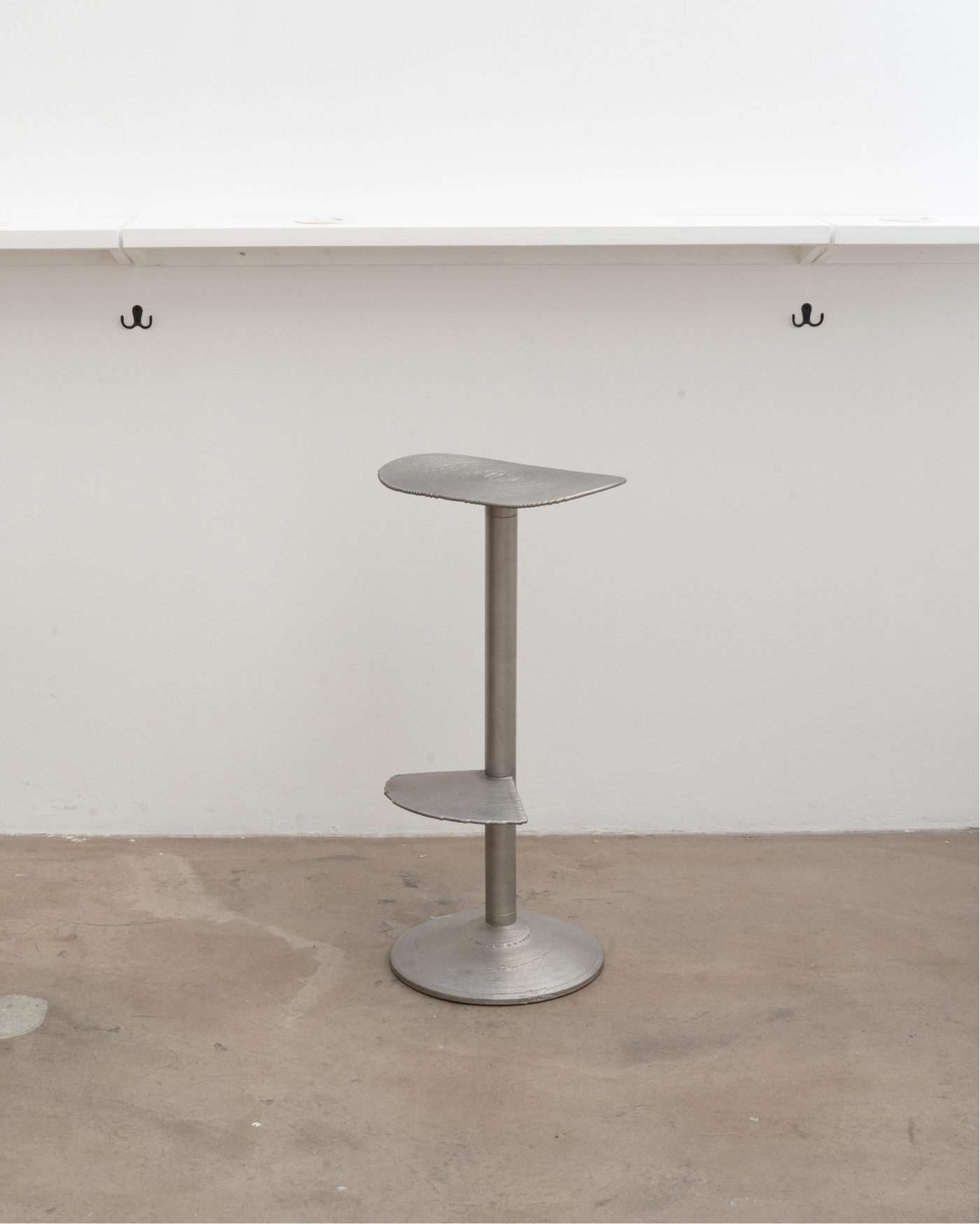
VORTEX starts from standard, industrially available steel profiles. Printed material is added only where it matters: where a leg meets the frame, where a joint carries load, where a surface becomes a seat. Everything in between stays semi-finished stock, so the printer is never asked to produce what the steel industry already produces well. Because the individual geometry lives in the printed zones alone, it can change from stool to stool without a mould and without new tooling.
This project explores hybrid manufacturing as a model for future-proof production: configurable, local and made without moulds.
Hybrid manufacturing keeps valuable, energy-intensive processes for the places where they earn their cost and leaves the rest to established, efficient industrial supply. Printing happens locally, on demand and at a scale that does not depend on volume. This opens up adaptability within clearly defined limits: a stable industrial framework with room for variation inside it. Each object can respond to a site, a use or a person, while remaining part of a shared, repeatable system.
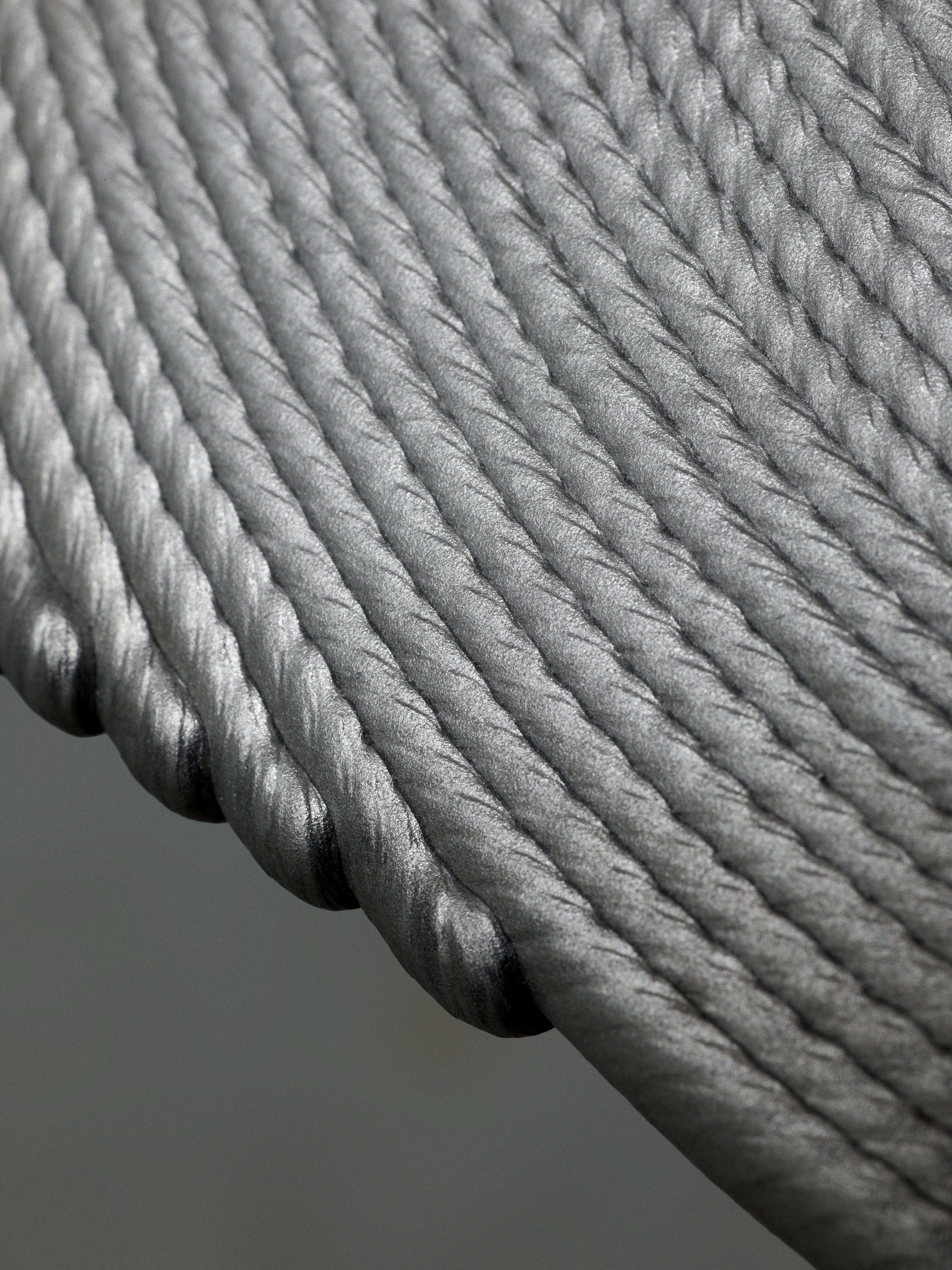
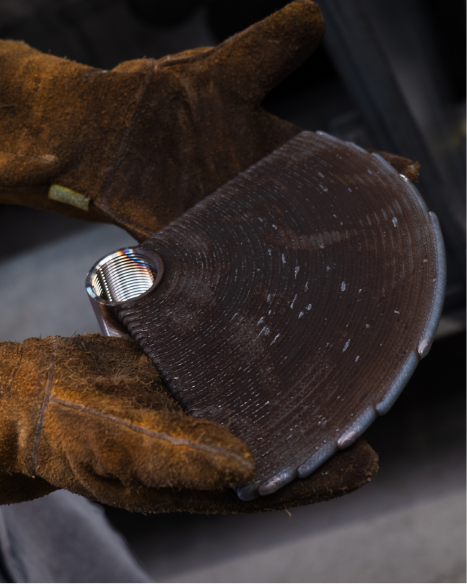
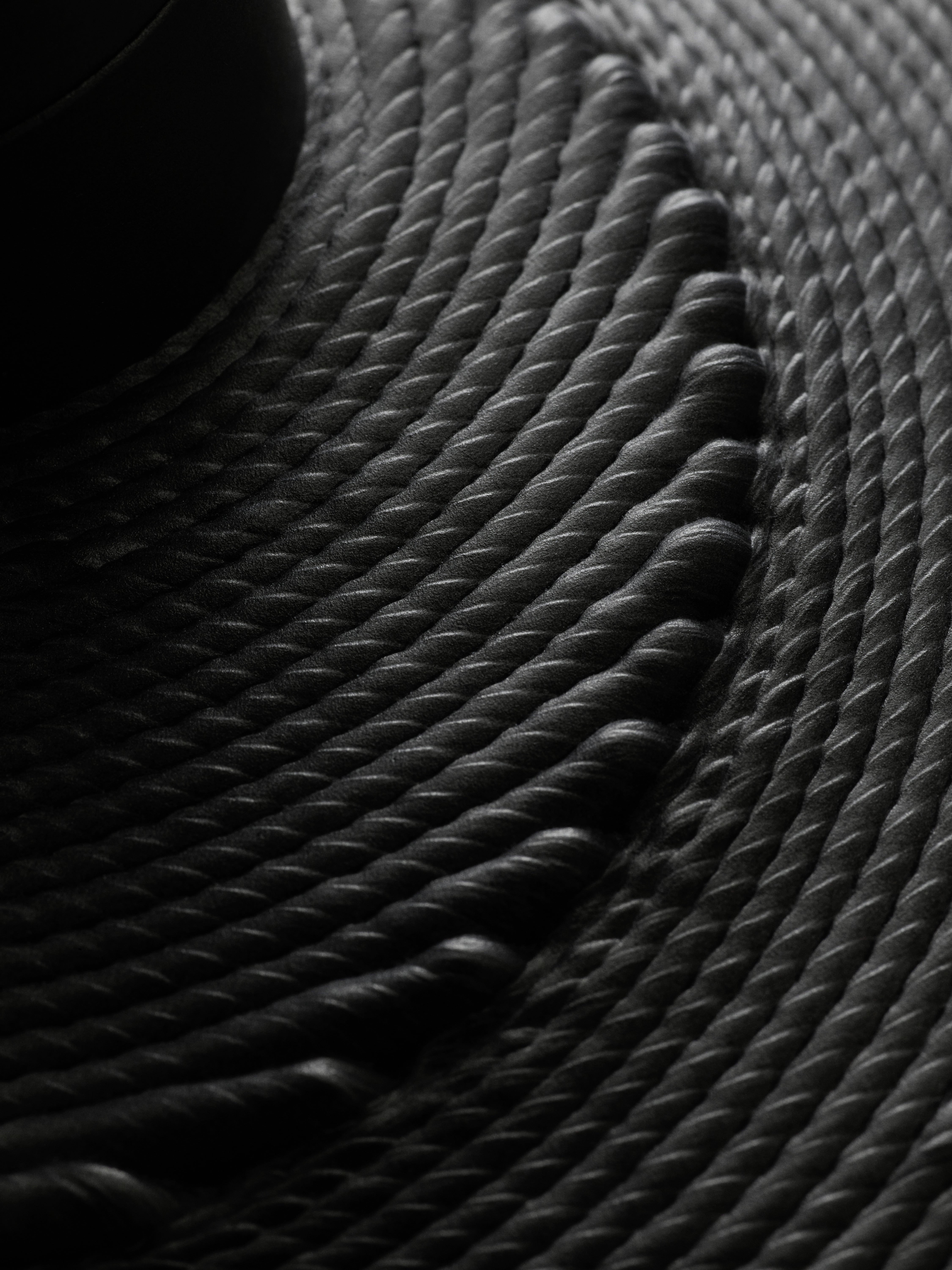
The welded spirals are not decoration applied afterwards; they are the honest surface of the process.
Metal is welded in continuous spirals, layer upon layer, and every layer stays visible. Rather than grinding these traces away, we let them define the object. The result is a formal language that belongs to the process itself: a swirling, ribbed surface that records how the stool came into being. Every new production technology brings its own aesthetic with it, and VORTEX asks what these emerging processes look like when their traces are not concealed.
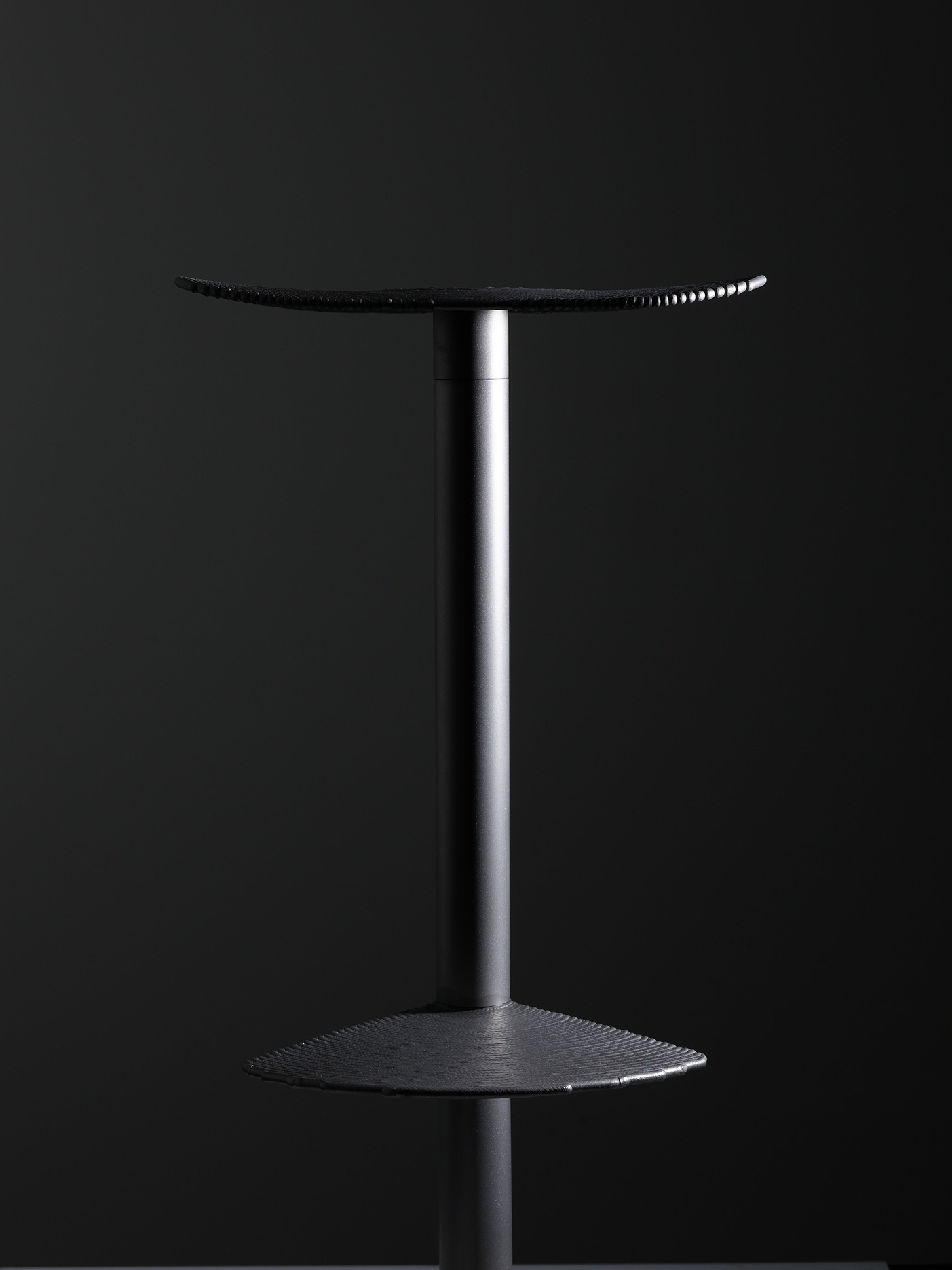
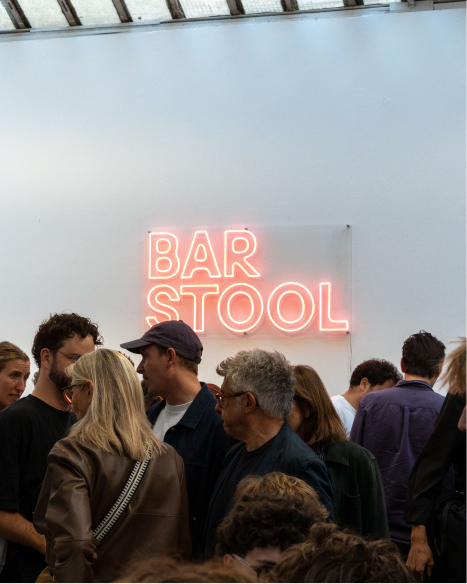
VORTEX was shown at the Bar Stool Exhibition at Brownstone Foundation during Paris Design Week, 10–19 September 2026.
Curated by Athime de Crecy and Quentin Frichet, the exhibition brought together twenty-seven French and European designers, each invited to work around the theme of the stool. Exhibition images: Athime de Crecy, Quentin Frichet.

Technical Lead
GEFERTEC
Design
WINT Design Lab
Assistants
Carl Bahra
Linus Rüllmann
Product Images
Amos Fricke
Post Production
Simone Strano
CGI
Tim Kipper
Exhibition Images
Athime de Crecy, Quentin Frichet
Sound Video
Mickis Kyrou
Exhibition Framework
Brownstone Foundation curated by
Athime de Crecy, Quentin Frichet